
The Morning You Realize the Door Isn't Moving
You hit the opener button on your way to work and nothing happens — or worse, the door shudders, lifts an inch, and the opener grinds before giving up. You get out, look down, and see it: a thin crust of ice fusing the bottom panel to the concrete apron. Or maybe there's no ice at all, and the door just feels heavier than it did in October, straining and creaking its way open instead of gliding.
Both are classic cold-weather complaints in this part of Michigan, and they don't always have the same cause. Before you lean on the opener button and hope for the best, it helps to know what's actually happening and in what order a technician would check it.
What You Might Be Noticing
- The door won't move at all when the opener is activated, and the motor hums or clicks without lifting it.
- The door starts to rise, then the opener reverses it back down.
- A loud crack or pop happens right as the door finally breaks free.
- The door opens unevenly, lifting on one side before the other.
- Everything works, but slower and noisier than it did a few months ago.
Each of these points toward a different link in the chain, so it's worth checking them in the order they're most likely to be the culprit.
First Check: Ice at the Bottom Seal
This is the simplest and most common cause, especially after a day of melting snow refreezes overnight on the driveway apron. Water seeps under the door's rubber seal, then drops below freezing and locks the whole bottom edge to the concrete.
What the fix looks like: never force the opener repeatedly — that strains the motor, can strip the drive gear, or bend the bottom panel. Instead, break the bond gently with a plastic scraper or putty knife worked along the seal, or use a small amount of de-icer or warm (not hot) water along the seam. Hot water on cold steel can cause the panel to warp or the ice to simply re-form within minutes. Once the door is free, dry the seal area if you can, and keep the apron cleared of standing snow so meltwater has less chance to collect there overnight.
If the Seal Itself Is the Problem
A cracked, flattened, or gapped bottom seal lets more moisture underneath in the first place, so the door freezes down more often than it should. If yours looks worn or no longer sits flush against the floor, replacing the astragal seal is a quick fix that prevents a repeat performance on the next freeze-thaw cycle.
Second Check: Thickened Lubricant on Tracks and Hinges
Even without any ice, old or dirty lubricant thickens in deep cold, turning tracks, rollers, and hinges gummy instead of smooth. This shows up as a door that's technically moving but working much harder than it should, with extra noise along the way.
What the fix looks like: wipe old grease and grime off the tracks and hinges with a clean rag, then apply a lithium- or silicone-based garage door lubricant rated for cold temperatures. Skip household oils and avoid using WD-40 as a long-term lubricant — it's a solvent first and evaporates quickly, leaving things dry again within days.
Third Check: Spring Tension in Cold Steel
Torsion and extension springs are steel, and steel behaves differently when it's cold — it stiffens slightly and loses a bit of flex. On a door with springs that were already near the end of their life, that small shift is enough to throw off the balance, making the door noticeably heavier for the opener to lift. This is often what's behind an opener straining or reversing partway up.
What the fix looks like: with the opener disconnected, the door should lift smoothly by hand and hold its position at waist height. If it doesn't, the spring tension needs adjustment, or the spring has reached the point where it needs replacement. Spring work involves components under heavy tension and isn't a safe DIY project — this is one to leave to a technician.
Fourth Check: Opener Force Settings and Resistance
A door that's stiffer from cold can trip an opener's built-in resistance sensing, causing it to reverse or stop short even though nothing is mechanically broken. If the spring tension and lubrication both check out, this is worth a look, particularly on older openers that were last calibrated in warmer weather.
Fifth Check: Track Alignment and Hardware
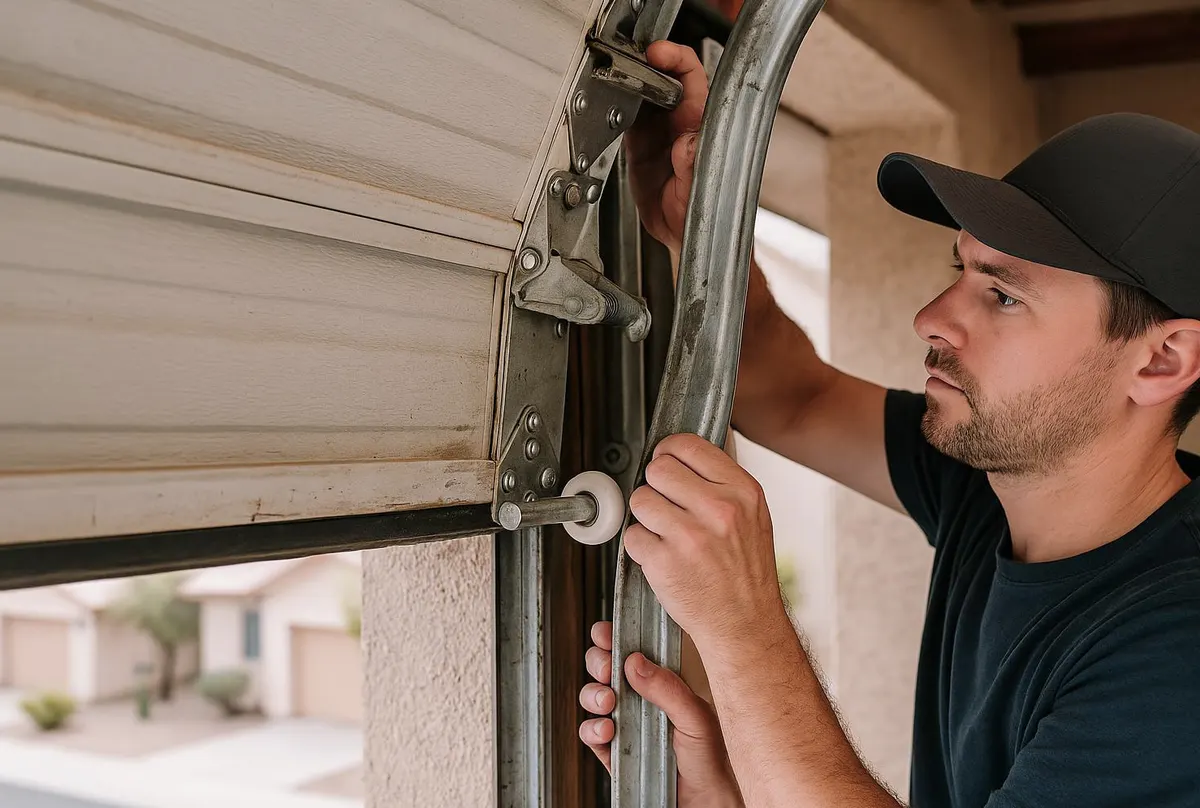
Frost heave under a slab or an unheated garage floor can shift track mounting brackets just enough to cause binding, especially in detached garages or older foundations common around Flushing. Road salt tracked in on tires over the winter also accelerates corrosion on rollers, hinges, and fasteners, which compounds any stiffness already caused by the cold. A quick check of track plumb, bracket tightness, and roller condition rounds out the diagnosis.
When to Call Flushing Garage Door Specialists
If your door is frozen to the slab repeatedly, if it's noticeably heavier than it used to be, or if the opener is straining and reversing, it's worth having it looked at before a panel bends or a spring fails outright. Our Garage Door Maintenance service covers lubrication, balance checks, and seal replacement before the next hard freeze, and if a spring has lost its tension for good, our Spring Replacement service handles that safely. For a door that's completely locked up and won't budge, our Emergency Garage Door Service gets someone out to free it without damaging the panel or seal.
If your garage door is giving you trouble this winter, call Flushing Garage Door Specialists — we serve Flushing, MI and the surrounding area and can have a technician out to get your door moving smoothly again.