
Short answer: the door still has a job, just a different one
Turning a garage into a gym, workshop, or extra room doesn't make the garage door optional. It still faces the weather, still needs to seal, still has springs under tension, and in most cases still needs to open for resale value, deliveries, or the day you change your mind. What changes is what the door needs to do well — and that's usually where the argument starts. One spouse wants to drywall over it and forget it exists. The other wants to keep it fully functional. Both of you are half right.
Why you can't just ignore it once the room is finished
A garage door is the single largest moving opening on the house, and it's also the least insulated part of the structure if nobody's touched it. Once you add heat, drywall, flooring, or gym equipment behind it, that door becomes the weak point in the room's comfort and the first place problems show up.
- Temperature swings get worse, not better. A heated or semi-heated space next to Michigan's deep winter cold creates a sharp temperature difference right at the door panel. That's exactly the setup that causes condensation.
- Humid summers add the opposite problem. Warm, humid air meeting a cooler door surface (or vice versa) can leave moisture on the inside skin of the door, which over time contributes to rust on hardware and rot on wood-trimmed doors.
- The door still takes the brunt of winter. Snow, ice, and road salt don't care that you put a squat rack on the other side. The bottom seal, weatherstripping, and track still deal with slush and freeze-thaw cycles all winter long.
Insulation changes the weight the springs have to lift
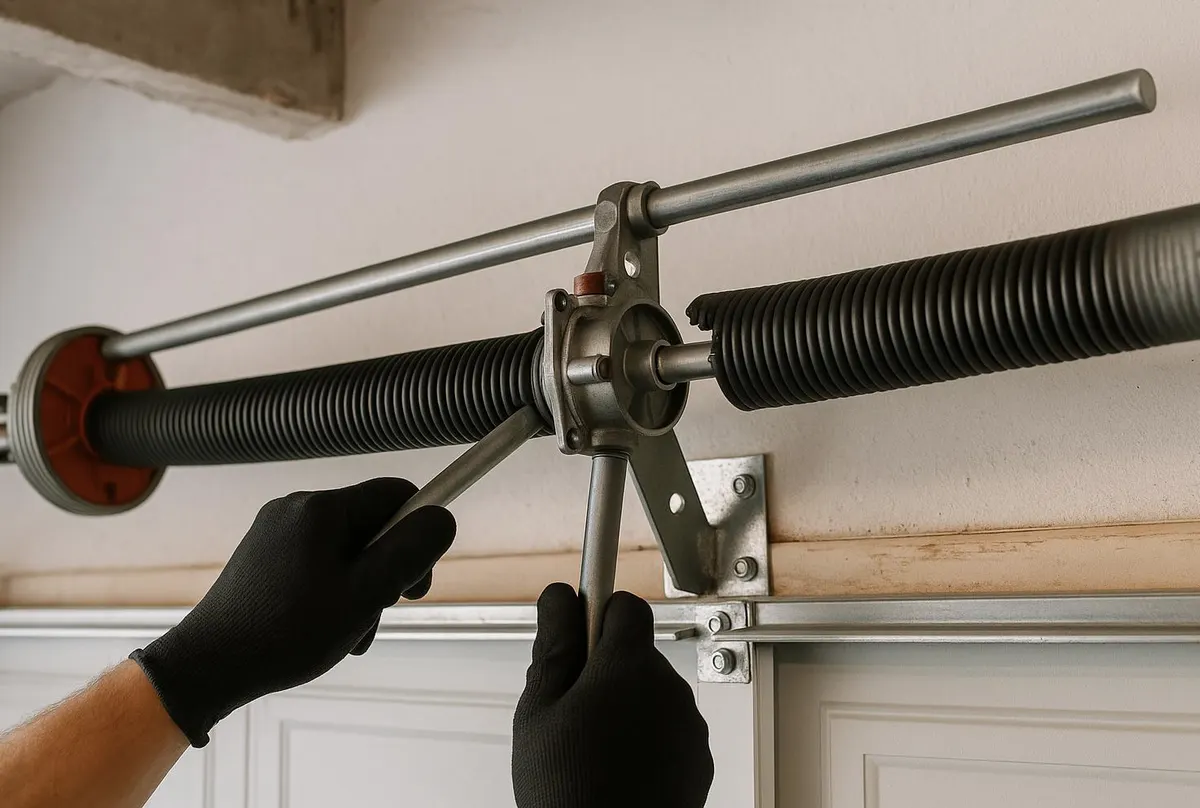
If you've added an insulated garage door, or insulated panels to an existing one, as part of the conversion, you've changed the door's weight — sometimes significantly. Torsion springs are calibrated to the door's original weight. A heavier, insulated door on old springs will fight the opener, close harder than it should, and wear out the opener's gears faster. This is one of the most common things people miss during a conversion: they upgrade the door for comfort and never have the springs rebalanced to match.
If the door feels harder to lift by hand, slams down faster than it used to, or the opener strains and makes new noises after an insulation upgrade, that's a spring tension problem, not an opener problem.
Sealing matters more here than in a standard garage
In a standard garage, a gap at the bottom seal or a worn weatherstrip is an annoyance. In a finished room, it's a draft straight into your gym floor or workshop bench, and during spring thaw it's a path for meltwater to run in under the door. Check the bottom astragal seal and the side weatherstripping before winter sets in — this is cheap to replace and makes a real difference in a conditioned space.
Ceiling and opener clearance get tighter in a finished room
Drywalling the ceiling, adding insulation, or installing a drop ceiling for a home gym often reduces the headroom the opener rail and spring assembly need. This is a common conflict point: contractors frame for the room's look, not for the door's travel path. Before finishing the ceiling, confirm there's enough clearance for the torsion spring to rotate fully and for the opener's travel limits to be set correctly — if either gets boxed in too tight, you'll be troubleshooting a door that won't open or close all the way, long after the drywall is already painted.
Should you keep the door fully functional?
In most conversions, yes — even if you plan to use the space as a room and rarely open the big door. A functional garage door:
- Preserves resale flexibility — a future buyer may want the garage back
- Gives you a wide, code-free way to move large equipment, furniture, or materials in and out
- Avoids the cost and mess of permanently sealing and re-siding the opening
If you genuinely never plan to use it as a garage again, replacing the door with a framed wall is a bigger construction project than a garage door company handles — but it's worth weighing against simply keeping a well-sealed, well-insulated door that still opens when you need it.
When to call Flushing Garage Door Specialists
If you're mid-conversion or just finished one, it's worth having the door checked before you close up the walls. We handle the parts of this that matter most: rebalancing spring replacement to match a newly insulated door's weight, and garage door maintenance to reset weatherstripping, check the bottom seal, and confirm the opener's travel limits still work with the new ceiling clearance. Catching a mismatch now — rather than after drywall is up — saves you from tearing anything out later.
If your converted garage in Flushing, Flint, Swartz Creek, Clio, Linden, Fenton, Grand Blanc, or Montrose is fighting its door — hard to lift, drafty, or not sealing right — give Flushing Garage Door Specialists a call. We'll look at the whole setup, not just the symptom, and get it right before winter settles in.